

Wedding bands may look simpler than engagement rings, but choosing the right one still requires several decisions. Metal, width, profile, finish and gemstone details all affect how the ring looks and feels during everyday wear.
The best wedding bands should suit your lifestyle, complement your engagement ring and remain comfortable for years. This guide explains the main metals and styles, including how to choose matching his and hers bands.
Wedding Band vs. Wedding Ring: Is There a Difference?
The terms wedding band and wedding ring are often used interchangeably. Both refer to the ring exchanged during the wedding ceremony and worn as a symbol of marriage.
However, “wedding band” often describes a simpler design, while “wedding ring” may include diamond-set, decorative or more elaborate styles. In practice, either term can refer to any ring chosen for the ceremony.
Popular Wedding Band Metals

The metal influences the ring’s color, durability, weight, maintenance and price.
Yellow Gold
Yellow gold is one of the most traditional choices for wedding bands. Its warm color suits classic designs and pairs naturally with yellow gold engagement rings.
Higher-karat gold contains more pure gold but is generally softer. For everyday jewelry, 14K and 18K gold offer a practical balance between appearance and durability.
White Gold
White gold has a cool, bright finish that resembles platinum at a lower price point. It is often coated with rhodium to improve whiteness and shine.
Over time, the coating may wear away and require replating. White gold is a popular option for diamond bands because its color blends easily with the stones.
Rose Gold
Rose gold receives its pink tone from copper in the alloy. It creates a soft, romantic appearance and works especially well with vintage-inspired or delicate rings.
Its warm color can complement many skin tones. Because rose gold already has a distinctive appearance, even a simple polished band can feel unique.
Platinum
Platinum is naturally white, dense and highly durable. It does not require rhodium plating and is often selected for rings intended for frequent wear.
The metal develops a soft patina over time rather than losing material in the same way as some gold alloys. Platinum wedding bands usually cost more and feel heavier on the finger.
Palladium
Palladium belongs to the platinum family and has a naturally white appearance. It is lighter than platinum and does not need regular replating.
Availability can be more limited, which may make resizing or finding a matching ring more difficult.
Titanium
Titanium is lightweight, durable and modern. It is popular for minimalist wedding bands and wider men’s rings.
The main disadvantage is limited resizing. Couples should confirm sizing carefully and ask whether the ring can be replaced if their finger size changes.
Tungsten
Tungsten wedding bands are known for their weight, hardness and resistance to scratching. They often have a polished, matte or dark finish.
Although tungsten is highly scratch-resistant, it can crack under strong impact. It also cannot usually be resized.
Silver
Sterling silver is affordable and has a classic bright color. However, it is softer than gold or platinum and can scratch or tarnish more easily.
Silver may suit occasional jewelry, but couples planning to wear their wedding rings every day should consider its maintenance requirements.
Gold vs. Platinum Wedding Bands

Gold and platinum remain two of the most common choices for fine wedding jewelry.
Choose gold when you want:
- More color options
- A lighter ring
- A lower initial price
- Easier resizing
- A classic polished finish
Choose platinum when you want:
- A naturally white metal
- Greater density and weight
- No rhodium replating
- Excellent security for small diamonds
- A finish that develops a natural patina
Neither metal is automatically better. The right choice depends on budget, preferred color, weight and maintenance expectations.
Popular Wedding Band Styles

Classic Plain Band
A plain wedding band has no gemstones or decorative details. It is timeless, practical and easy to coordinate with other jewelry.
Plain bands can still vary in width, shape, finish and metal, allowing couples to personalize a simple design.
Diamond Wedding Band
Diamond bands contain one or more rows of stones across part or all of the ring. They add sparkle and can visually connect the wedding band to a diamond engagement ring.
Common settings include pavé, channel, shared-prong and bezel-set diamonds.
Half-Eternity Band
A half-eternity ring features diamonds across the visible upper half of the band. The plain lower section usually makes resizing and repairs easier.
It also keeps diamonds away from the underside of the finger, where they may experience more impact.
Full-Eternity Band
A full-eternity band has gemstones around the entire circumference. It provides continuous sparkle from every angle.
Because the stones go all the way around, resizing may be difficult or impossible. Precise sizing is especially important.
Curved Wedding Band
A curved band follows the outline of an engagement ring, allowing both rings to sit closer together. It works well with low settings, halos and unusually shaped center stones.
The curve may be subtle or deeply contoured depending on the engagement ring.
Notched Wedding Band
A notched band includes a small indentation designed to fit around the engagement ring’s center setting. It can provide a close fit without curving the entire ring.
Chevron Wedding Band
A chevron band forms a pointed V shape. It can frame pear, marquise and oval engagement rings or add a geometric detail to a simple solitaire.
Open Wedding Band
An open band does not form a complete circle at the top. The gap may surround the engagement ring’s center stone or feature diamonds at each end.
This contemporary style is visually light but should be carefully designed to prevent bending or catching.
Twisted Wedding Band
A twisted band uses two intertwined sections of metal, sometimes combining a plain strand with a diamond-set one. The design adds movement while remaining relatively delicate.
Vintage-Inspired Wedding Band
Vintage bands may include milgrain edges, engraving, filigree or floral details. They are ideal for antique-style engagement rings or couples who prefer decorative jewelry.
Textured Wedding Band
Hammered, brushed, satin and matte finishes offer an alternative to polished metal. Texture can make a simple ring feel more distinctive and may help disguise minor scratches.
Mixed-Metal Wedding Band
Mixed-metal rings combine yellow, white or rose tones in one design. They are useful when partners prefer different metals or when the engagement ring already includes multiple colors.
How to Match a Wedding Band to an Engagement Ring

The rings do not need to be identical, but they should look intentional when worn together.
Match the Metal—or Create Deliberate Contrast
Choosing the same metal creates a cohesive bridal set. A contrasting metal can also work when the combination is clearly intentional, such as a white gold engagement ring with a slim yellow gold wedding band.
Consider how different metals may wear against each other. A harder ring can gradually scratch a softer one.
Consider the Engagement Ring’s Setting
A high-set solitaire usually leaves enough space for a straight band. Low-profile settings, halos and rings with large side stones may require a curved or notched wedding band.
Try the two rings together rather than relying only on measurements.
Balance the Band Width
A slim engagement ring often pairs naturally with a narrow wedding band. A wider engagement ring may look more balanced with a slightly broader band.
The bands do not need to be the same width, but one should not unintentionally overpower the other.
Coordinate the Diamond Details
When both rings contain diamonds, compare the setting style, stone size and spacing. A delicate pavé engagement ring may look more cohesive with a fine pavé wedding band than with very large shared-prong diamonds.
An exact match is not essential. A plain band can provide a clean contrast beside an ornate engagement ring.
Decide Whether the Rings Should Sit Flush
Some people prefer no visible gap between the rings. Others like the separation because it helps each design remain distinct.
A flush fit may require a contoured band or a custom ring made specifically for the engagement setting.
His and Hers Wedding Bands
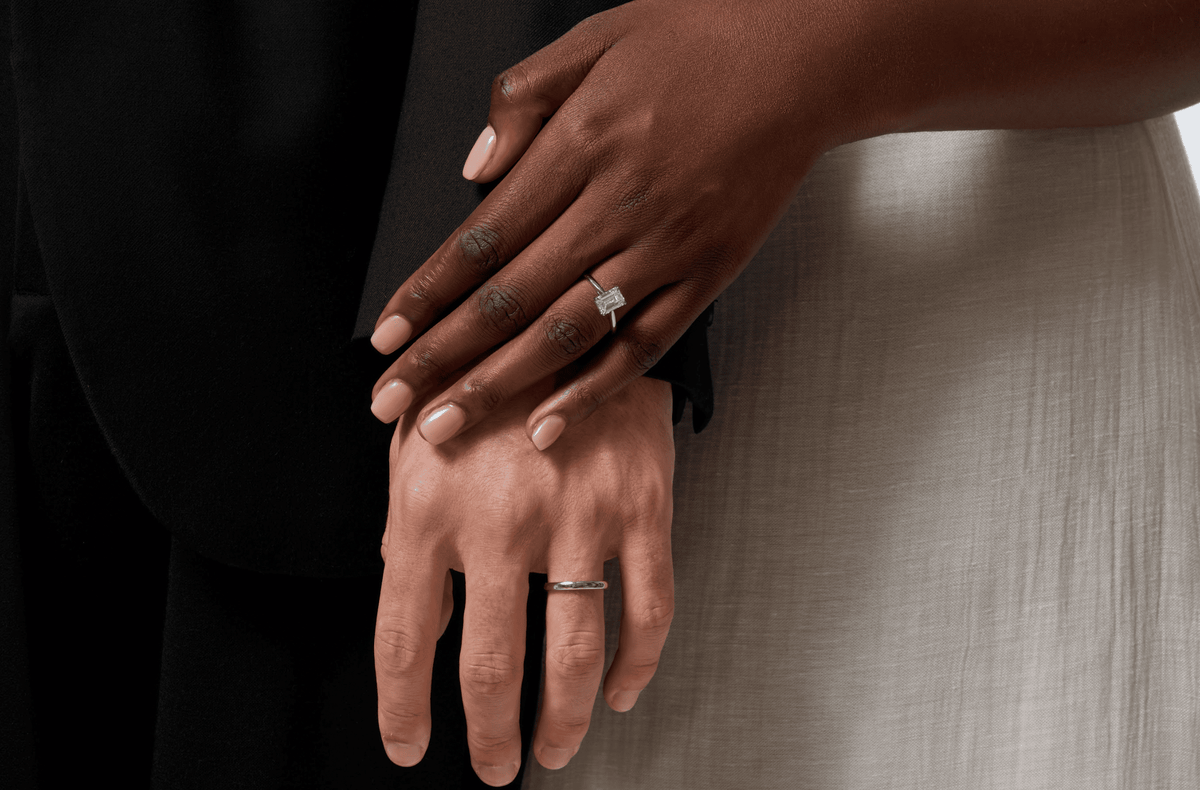
His and hers bands do not have to be identical. Many couples choose rings that share one or two design elements while still reflecting individual preferences.
Possible matching details include:
- The same metal
- Similar engraving
- Coordinated finishes
- Matching edge details
- The same gemstone
- Different widths in one design
For example, one partner may choose a narrow yellow gold diamond band while the other selects a wider plain band in the same gold. The rings feel connected without looking exactly alike.
Choosing the Right Width and Profile
Wedding bands commonly range from delicate 2 mm designs to bold bands measuring 8 mm or more.
Narrow bands feel light and subtle. Wider bands create a stronger visual presence but may feel tighter, so they sometimes require a slightly larger size.
The profile also affects comfort:
- Flat bands have a clean, contemporary look.
- Domed bands have a rounded outer surface and traditional appearance.
- Comfort-fit bands are curved on the inside to slide more easily over the knuckle.
- Knife-edge bands have a raised center ridge for added definition.
Trying different widths and profiles is the best way to determine what feels natural.
Practical Details Before Buying
Before ordering wedding rings, consider how they will be worn every day.
Lifestyle
People who work with their hands may prefer smooth bands, secure stone settings and durable metals. Raised diamonds and intricate details generally require more care.
Resizing
Gold and platinum rings are usually easier to resize than tungsten, titanium or full-eternity bands. Ask about resizing before committing to the design.
Maintenance
Polished bands may show scratches more easily, while matte finishes can gradually become smoother. Diamond bands should be checked periodically to ensure the stones remain secure.
Future Ring Stacks
Think about whether you may later add an anniversary ring or another decorative band. A simple wedding ring can provide more flexibility for building a stack.
Engraving
Names, initials, wedding dates or short personal messages can make even a plain band meaningful. Check that the chosen width leaves enough space for readable engraving.
Finding Wedding Bands You Will Enjoy Wearing
The best wedding bands balance appearance, comfort and practicality. Start with the metal, then compare widths, profiles and decorative details before deciding how closely the rings should match.
Whether you choose coordinated his and hers bands, a diamond eternity ring or two completely different wedding rings, the designs should feel comfortable and personal to both partners.







Leave a Reply