

Fall wedding colors do not have to mean burgundy, orange and brown by default. Autumn gives you a much wider palette: dusty blue, sage, plum, caramel, mauve, forest green, champagne and even soft pink can all feel seasonal when combined well.
The key is balance. Richer shades create depth, while lighter neutrals keep the wedding from feeling too dark or heavy.
Here are 35 fall wedding colour palettes that feel current, elegant and easy to use across flowers, stationery, tables and attire.

Warm and Romantic Fall Wedding Colors

1. Burgundy + Blush + Ivory
A classic fall combination that still feels soft. Burgundy adds depth, blush keeps it romantic and ivory prevents the palette from becoming too dark.
Best for: vineyards, estates, formal receptions.
2. Rust + Cream + Olive
Rust feels distinctly autumnal without looking overly traditional. Olive adds a natural element, while cream keeps the overall look calm.
Best for: barns, outdoor ceremonies, countryside weddings.
3. Terracotta + Peach + Beige
A warmer, lighter alternative to burgundy. These tones work beautifully with dried flowers, natural linens and warm wood.
Best for: boho and destination-style weddings.
4. Cinnamon + Dusty Rose + Champagne
Cinnamon adds warmth while dusty rose softens the palette. Champagne details can bring in a little understated glamour.

5. Copper + Ivory + Soft Pink
Copper works especially well in candlelight and evening receptions. Use it through flatware, stationery or small décor details rather than covering every surface.
6. Burnt Orange + Mauve + Cream
Burnt orange becomes much softer when paired with muted mauve instead of deep red.
Best for: October weddings and floral-heavy décor.
7. Caramel + Blush + Warm White
A subtle palette for couples who want autumn warmth without strong seasonal colors.
Burgundy Wedding Colour Palettes

8. Burgundy + Navy + Gold
Deep, formal and elegant. Gold accents add warmth and keep the darker colors from feeling flat.
Best for: evening and black-tie weddings.
9. Burgundy + Sage + Ivory
One of the easiest ways to balance a rich red tone. Sage introduces softness and works naturally with greenery.
10. Burgundy + Dusty Blue + Cream
The contrast between warm burgundy and cool dusty blue makes this palette feel more sophisticated than a traditional fall scheme.
11. Burgundy + Plum + Rose
Layering related jewel tones creates a romantic, dramatic look without relying on black.
12. Burgundy + Taupe + Champagne
Muted neutrals make burgundy feel less heavy and more refined.
Sage Green Wedding Palettes
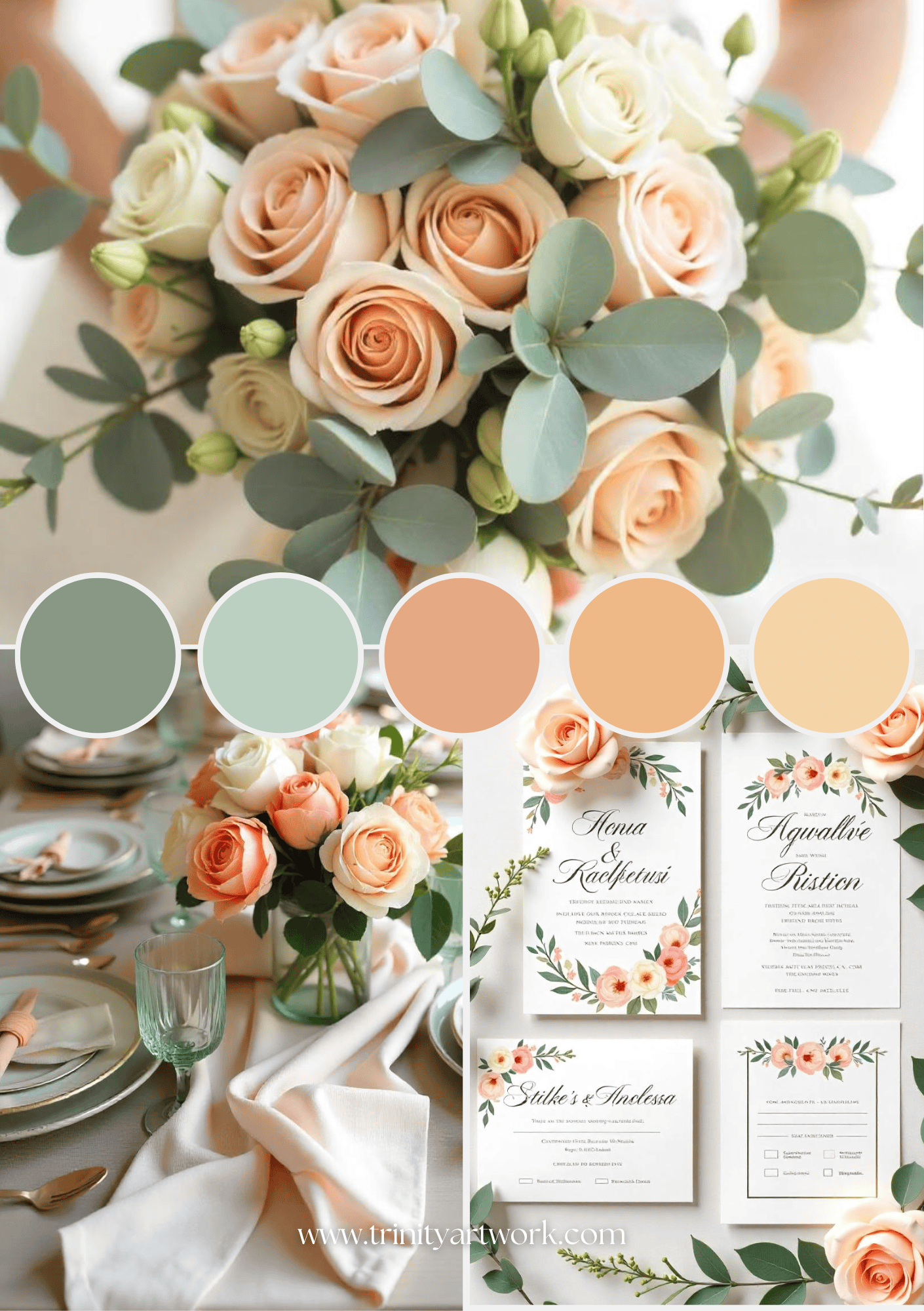
13. Sage + Terracotta + Ivory
Natural and warm without being overly rustic. This combination works particularly well with ceramic details and textured linens.
14. Sage + Dusty Rose + Cream
Soft and romantic, with enough warmth to suit early fall.
Best for: garden weddings transitioning into autumn.
15. Sage + Mustard + Beige
Mustard brings a stronger seasonal feeling while sage keeps it grounded.
Use mustard as an accent rather than the dominant color.
16. Sage + Burgundy + Gold
A richer version of the sage palette that works beautifully for formal fall weddings.
17. Sage + Chocolate Brown + Ivory
Earthy, understated and elegant. Chocolate brown is especially effective through stationery, suits or velvet accents.
18. Sage + Mauve + Taupe
Muted from top to bottom, which makes this palette ideal for couples who dislike bright colors.
Dusty Blue Wedding Palettes for Fall

19. Dusty Blue + Burgundy + Ivory
This is one of the strongest fall wedding color schemes because it combines cool and warm tones without looking predictable.
20. Dusty Blue + Rust + Cream
Rust warms up dusty blue and gives the palette a more seasonal feel.
21. Dusty Blue + Mauve + Silver
A softer, cooler fall palette that works beautifully in elegant indoor venues.
22. Dusty Blue + Navy + Champagne
Polished and understated. Navy can anchor the palette through suits, stationery or table linens.
23. Dusty Blue + Caramel + Ivory
An unusual but beautiful combination. Caramel adds warmth without becoming orange.
Moody Fall Wedding Colors

24. Plum + Black + Mauve
Rich and dramatic, but mauve prevents the combination from becoming too severe.
Best for: evening weddings and candlelit receptions.
25. Forest Green + Burgundy + Gold
A strong jewel-tone palette for late fall. Use plenty of ivory or candlelight to soften the overall effect.
26. Navy + Copper + Cream
Navy provides structure, while copper gives the palette warmth and depth.
27. Chocolate Brown + Blush + Ivory
Brown has become a sophisticated alternative to black, especially when used with soft pinks and creamy neutrals.
28. Deep Teal + Rust + Gold
Teal and rust create a strong contrast without feeling too obvious. Gold details tie the two together.
29. Aubergine + Sage + Champagne
Aubergine feels softer than black but still provides enough drama for a formal fall celebration.
Neutral Fall Wedding Colour Schemes

30. Taupe + Ivory + Champagne
Elegant, minimal and easy to adapt. Texture becomes especially important when the palette is this neutral.
Think linen, velvet, ceramics and layered florals.
31. Beige + Caramel + White
Warm neutrals create an understated autumn look without using traditional seasonal colors.
32. Mocha + Cream + Soft Gold
Mocha works beautifully for late fall and brings depth without feeling too dark.
33. Stone Gray + Dusty Rose + Ivory
A softer alternative to warm brown palettes. Gray gives the scheme a slightly more modern finish.
Fresh and Unexpected Fall Wedding Palettes

34. Mustard + Dusty Blue + Cream
This combination feels playful without losing sophistication. Keep mustard limited to flowers and accents.
35. Olive + Lavender + Taupe
Lavender may sound like a spring color, but paired with olive and taupe it becomes surprisingly autumnal.
It is a good option for couples who want something different from burgundy and rust.
How to Build a Fall Wedding Colour Palette

You usually do not need five equally strong colors.
A simple approach is:
- One main color for bridesmaid dresses, stationery or linens
- One supporting color for flowers and décor
- One neutral to give the palette breathing room
- One metallic or accent tone if needed
For example:
Burgundy + dusty blue + ivory + gold
Burgundy may lead the palette, dusty blue adds contrast, ivory keeps it soft and gold appears only in small details.
Where to Use Your Wedding Colors
Your palette should guide the wedding rather than appear identically everywhere.
Use color through:
- Bridesmaid dresses
- Groomsmen ties or pocket squares
- Bouquets
- Ceremony flowers
- Invitations
- Table linens
- Candles
- Menus
- Signage
- Cake details
Repeating two or three shades throughout the day creates enough visual consistency.
Consider the Venue Before Choosing Colors
The venue already has a color palette.
A ballroom with dark carpets and gold walls needs a different scheme from a white barn or outdoor vineyard.
Before committing, look at:
- Wall color
- Flooring
- Chairs
- Existing curtains
- Table surfaces
- Natural surroundings
You may need much less décor when your chosen colors already work with the space.
Early Fall vs. Late Fall
September weddings can usually support softer colors such as sage, dusty blue, peach and mauve.
By late October and November, richer shades often feel more natural:
- Burgundy
- Plum
- Forest green
- Chocolate
- Navy
- Copper
There is no rule that says you have to follow the season exactly, but the surrounding landscape can make certain palettes feel especially cohesive.
Choose Colors You Will Still Love in Photos
Trends are useful for inspiration, but your wedding color scheme should feel like you.
If you love pale blue, there is no reason to replace it with orange simply because the wedding is in October. Pairing it with rust, burgundy or caramel can make it feel perfectly suited to fall.
The strongest palettes usually mix one color you genuinely love with a few shades that help it belong to the season.





Leave a Reply