

The best engagement rings combine personal style, thoughtful craftsmanship and a price you feel comfortable paying. Choosing one becomes easier when you know which details matter and where you can be flexible.
From understanding the diamond 4Cs to comparing settings, here is how to buy an engagement ring with confidence.
Start With Your Partner’s Style
Before comparing diamonds, think about the person who will wear the ring. Look at their everyday jewellery: do they prefer warm gold, white metals, simple designs or more decorative pieces?
Focus on three preferences:
- Metal colour: yellow gold, rose gold, white gold or platinum.
- Stone shape: round, oval, emerald, cushion or another favourite.
- Overall design: understated, vintage-inspired, glamorous or contemporary.
Consider their daily routine, too. Try different ring heights and band widths to see what feels comfortable.
If you are unsure, shopping together can help. You can still keep the proposal itself a surprise.
Set a Realistic Engagement Ring Budget
There is no required amount to spend. Choose a budget that works alongside your other plans, then compare rings within that limit.
Ask for the complete price, including the centre stone, setting, taxes and any delivery or resizing charges. A loose-diamond price may cover only part of the finished ring.
Choose your priorities before browsing. If sparkle matters most, focus on cut quality. If your partner loves an intricate setting, leave enough room in the budget for that design.
A useful rule: pay for differences you appreciate, rather than automatically choosing the highest specifications.
Understand the Diamond 4Cs
The diamond 4Cs are cut, colour, clarity and carat weight. Together, they help describe and compare diamond quality.
Cut: How the Diamond Sparkles
Cut concerns a diamond’s proportions and workmanship, which affect how it interacts with light. It is different from shape: oval describes an outline, while cut quality describes how well the stone has been fashioned.
For standard round brilliant diamonds in the D-to-Z colour range, GIA assigns cut grades from Excellent to Poor. Excellent is a useful starting point, followed by comparing the actual stones.
Colour: How Much Warmth You See
GIA’s normal diamond colour scale runs from D to Z, with D representing colourless.
You do not necessarily need a D-colour diamond. For round brilliants, G–H can be a useful comparison point when balancing appearance and budget. Stone size, metal colour and personal preference all influence the choice.
Clarity: Internal and Surface Characteristics
Clarity describes inclusions inside a diamond and blemishes on its surface. Grading uses 10× magnification, so some characteristics on a report may be difficult to see without magnification.
Ask to compare stones at normal viewing distance. For round brilliant diamonds, VS2 and some SI1 stones may offer appealing options, but each diamond needs individual inspection.
Carat: Weight, Not Just Size
Carat measures weight. Two diamonds with the same carat weight can have different visible dimensions, so compare their measurements in millimetres.
Looking slightly below a popular weight, such as 1.00 carat, may also reveal a worthwhile alternative.
Check whether an advertised weight describes the centre stone or the combined weight of every stone in the ring.
Natural vs. Lab-Grown Diamonds
Natural diamonds form in the earth. Lab-grown diamonds are manufactured and have essentially the same chemical, physical and optical properties. Moissanite and cubic zirconia are separate materials, rather than lab-grown diamonds.
If you are open to either origin, request comparable options and decide which offers the appearance you want within your budget.
Check the laboratory report format carefully. Since October 2025, GIA has used Premium and Standard assessments for eligible colourless to near-colourless lab-grown diamonds, rather than its traditional natural-diamond grading format.
Choose a Shape and Setting
Shape defines the centre stone’s outline. Round offers a classic look; oval creates an elongated silhouette; cushion has softer corners; emerald brings clean, architectural lines.

The setting shapes the rest of the ring.
| Setting | What it offers |
| Solitaire | One main stone and a simple overall design |
| Halo | Smaller stones surrounding the centre |
| Three-stone | A centre stone with a stone on either side |
| Bezel | A metal rim surrounding the stone |
| Pavé | Small stones set along the band |
| Vintage-inspired | Decorative details influenced by earlier designs |
Try your favourites on and inspect them from the side. Check the height, comfort and how they look beside a wedding band.
For pavé or elaborate settings, ask about maintenance and resizing before ordering.
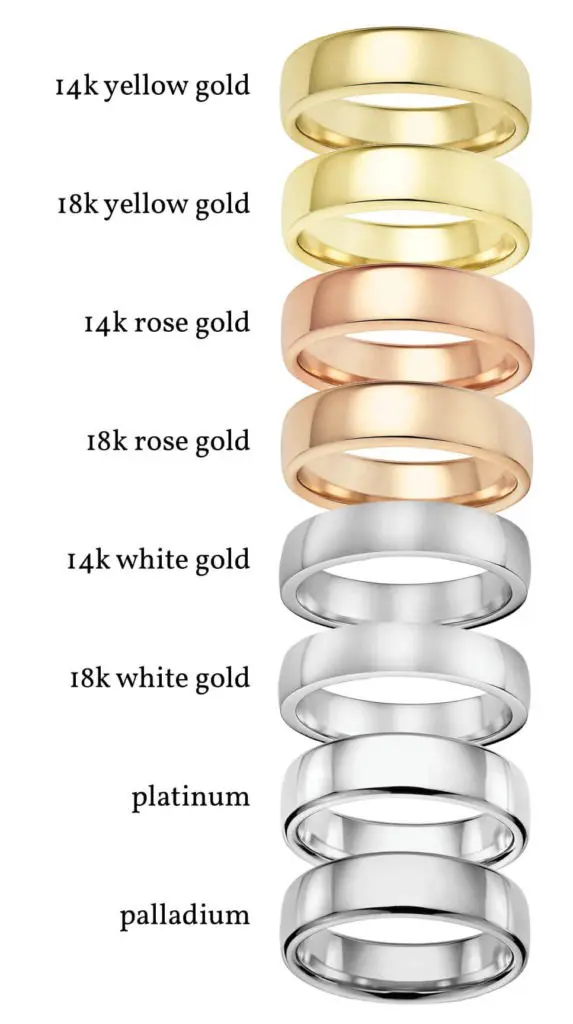
Pick Your Metal
Start with the metal colour your partner enjoys wearing.
Yellow and rose gold bring warmth, while white gold and platinum offer a white-metal appearance.
White gold is often rhodium plated, and that finish can need renewing. Some alloys contain nickel, so check the composition if the wearer has a known sensitivity. Platinum is denser than gold and can feel heavier in a comparable design.
Try the actual metal and band width you are considering.
Check These Details Before Buying
Before paying, confirm:
- Stone identity: its origin and any relevant treatments.
- Documentation: the report matches the stone and listing.
- Final price: all agreed charges are included.
- Sizing: the correct size and any resizing limits.
- Returns: deadlines and exclusions for custom work or engraving.
- Timing: a delivery date that allows room for adjustments.
For a diamond with a laboratory report, verify the report number through the issuing laboratory. Keep the report, invoice and written policies together.
Engagement Ring FAQs
Which Diamond C Matters Most?
Cut deserves close attention because it affects light performance. Then balance colour, clarity and carat weight around your preferences and budget.
Is a One-Carat Diamond Big Enough?
There is no required size. Compare the actual ring on the hand and choose proportions the wearer enjoys.
Can You Buy an Engagement Ring Online?
Yes, but request images or video of the actual stone and read the return, delivery and resizing policies before ordering.
What If You Do Not Know Their Preferences?
Discuss the main design choices or propose with a temporary ring and choose the final one together.







Leave a Reply