

A wedding veil can completely change how a bridal look feels. The same dress may look minimal with a short veil, romantic with lace or dramatic with a cathedral-length style.
The best wedding veil should complement the dress rather than compete with it. Length, fabric, edging and placement all matter, so it helps to compare the main options before deciding.
Wedding Veil Lengths Explained
Before choosing a style, start with length. This usually has the biggest impact on the final look.

1. Birdcage Veil
A birdcage veil is very short and usually covers part of the face. It works well with vintage, city and civil ceremony looks.
2. Blusher Veil
A blusher is a short layer worn over the face during the ceremony and lifted afterward. It can be worn alone or added to a longer veil.
3. Shoulder-Length Veil
This veil ends around the shoulders and feels light, simple and easy to wear. It suits shorter dresses and informal weddings.
4. Elbow-Length Veil
An elbow-length veil provides more presence without covering the entire dress. It works well with clean silhouettes and tea-length gowns.
5. Fingertip Veil
One of the most versatile veil lengths, it usually falls near the fingertips and suits almost every dress shape.
6. Knee-Length Veil
This slightly longer option adds movement while remaining easier to manage than floor-length styles.
7. Waltz Veil
A waltz veil falls between the knees and ankles. It gives the softness of a long veil while still allowing easy movement.
8. Floor-Length Veil
A floor-length veil ends around the hem of the dress without creating a long train. It feels formal but practical.
9. Chapel Veil
A chapel veil extends slightly behind the dress and creates a soft train effect. It suits traditional and romantic gowns.
10. Cathedral Veil
A cathedral veil extends well beyond the dress train and creates maximum drama. It is best suited to formal ceremonies and larger venues.
Classic Wedding Veil Styles

11. Plain Tulle Veil
A simple tulle veil is timeless and works particularly well with detailed wedding dresses.
12. Raw-Edge Veil
A raw edge has no visible trim, creating a clean, almost invisible finish.
13. Satin-Edge Veil
A narrow satin border gives the veil more definition and pairs naturally with satin gowns.
14. Pencil-Edge Veil
A very fine stitched edge adds subtle structure without becoming decorative.
15. Double-Tier Veil
Two layers create additional volume and can include a blusher for the ceremony.
Lace and Romantic Veil Styles

16. Lace-Edge Veil
Lace around the border adds softness and detail. It works best when the lace complements rather than exactly copies the dress.
17. Mantilla Veil
A mantilla veil traditionally features lace around the edges and is worn close to the head, framing the face.
18. Floral Lace Veil
Floral lace appliqués can be placed around the edge or scattered across the veil for a romantic effect.
19. Embroidered Veil
Embroidery can include flowers, vines, initials, dates or meaningful words.
20. Scalloped-Edge Veil
A curved lace or embroidered edge adds a softer finish than a straight border.
Modern Wedding Veil Styles
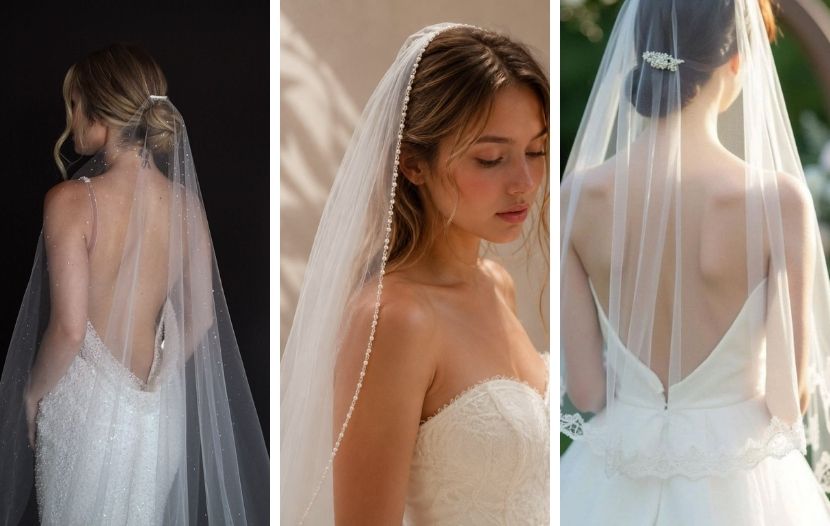

21. Pearl Veil
Small pearls scattered across the tulle create subtle texture and work especially well with pearl accessories.
22. Crystal Veil
Tiny crystals catch the light and add sparkle without requiring a heavily embellished dress.
23. Polka-Dot Veil
Dotted tulle gives the veil a playful, fashion-forward appearance.
24. Color-Tinted Veil
Soft blush, champagne or pale blue can create a modern alternative to traditional ivory.
25. Minimalist Long Veil
A long plain veil with no lace or embellishment creates dramatic movement while keeping the overall look clean.
Statement Wedding Veil Ideas
26. Personalized Veil
Add initials, a wedding date, short phrase or custom embroidery for a personal detail.
27. Floral Appliqué Veil
Three-dimensional flowers scattered across the tulle create texture and work beautifully with simple gowns.
28. Oversized Bow Veil
A large bow at the attachment point creates a modern, editorial look.
29. Veil With a Decorative Comb
A pearl, crystal or floral comb can become part of the hairstyle while securing the veil.
30. Detachable Statement Veil
A dramatic veil can be worn for the ceremony and photographs, then removed for easier movement during the reception.
How to Choose a Wedding Veil
The veil should support the dress, hairstyle and venue rather than add detail simply for the sake of it.
Match the Dress
A heavily embellished gown often works best with a simpler veil. A minimalist dress can support lace, pearls, embroidery or a dramatic cathedral veil.
Look at where the dress details are placed. A veil ending directly over important back embroidery may hide it.
Consider the Train
If the dress has a long train, the veil can end before it, match its length or extend beyond it.
For a strong formal effect, a cathedral veil that extends beyond the train creates the most dramatic silhouette.
Think About the Venue
A cathedral veil looks beautiful in a church or ballroom but may be difficult on a windy beach or narrow outdoor path.
For destination and outdoor weddings, fingertip, floor-length and waltz veils are often easier to manage.
How to Match the Veil to Your Hairstyle
Where the veil is attached changes both its length and volume.
Low Bun
Placing the veil above a low bun creates more volume. Attaching it underneath gives a cleaner, more understated look.
High Bun
A veil attached beneath a high bun falls naturally down the back and keeps the hairstyle visible.
Hair Down
A comb can be secured into small hidden braids or pinned sections so the veil stays in place.
Half-Up Hair
This is one of the easiest hairstyles for veil placement because the comb can sit securely where the hair is gathered.
Bring the veil or a similar sample to your hair trial whenever possible.
Should the Veil Match the Dress Exactly?
Not necessarily.
Ivory shades can vary considerably between designers, and an exact fabric match is often unnecessary. The veil simply needs to look harmonious beside the dress.
Pay particular attention to:
- Ivory or white tone
- Lace pattern
- Embellishment color
- Tulle softness
- Edge finish
Compare the veil against the actual dress rather than relying on product photos.
One Tier or Two?
A one-tier veil falls directly from the attachment point and usually looks cleaner and more modern.
A two-tier veil adds fullness and may include a shorter layer that can be worn over the face.
Choose according to the overall bridal look rather than tradition alone.
How Long Should a Cathedral Veil Be?
There is no single standard measurement, but cathedral veils generally extend several feet beyond the dress.
The exact length should depend on:
- Dress train
- Ceremony aisle
- Venue size
- Desired level of drama
Very long veils may require help from the wedding party when walking, turning or arranging photographs.
Wedding Veil Shopping Tips
Before ordering, check:
- Exact veil length
- Number of layers
- Attachment type
- Tulle color
- Edge finish
- Embellishment placement
- Comb color
- Delivery time
- Return policy
Try the veil with the dress before final alterations if possible. This helps ensure the proportions work together.
When to Buy Your Wedding Veil
Choose the veil after selecting the wedding dress but early enough to allow for custom orders and alterations.
Around three to six months before the wedding is usually a comfortable timeline, especially for embroidered or personalized designs.
Bring it to your final dress fitting and hair trial so the complete look can be tested together.
Choose the Veil That Completes the Look
The right veil should feel like a natural extension of the dress rather than a separate accessory.
A simple fingertip veil may be all a detailed gown needs, while a minimalist dress can become completely different with lace, pearls or a dramatic cathedral veil. Focus on proportion, movement and how the veil makes the entire outfit feel when you see it together.







Leave a Reply