

Buying a wedding dress is emotional. But the wedding dress alteration stage? That’s when everything suddenly starts feeling real. The gown that looked beautiful, clipped into place at the bridal boutique, begins transforming into something entirely different – something sculpted, polished and unmistakably yours.
The hem swishes properly. The bodice hugs in all the right places. The train glides behind like it was designed for that exact walk down the aisle. And somewhere between the first fitting and the final steam, the dress stops feeling like a purchase and becomes part of the whole wedding story.
And yet, wedding dress alteration appointments also come with a flood of questions. Some practical, some mildly panicked in the middle of the night after scrolling bridal trends on TikTok. Hemlines, timelines, bustle confusion, weight fluctuations, sleeve changes – it’s a lot.
So here’s a closer look at the questions almost every bride asks before stepping onto the alterations platform.
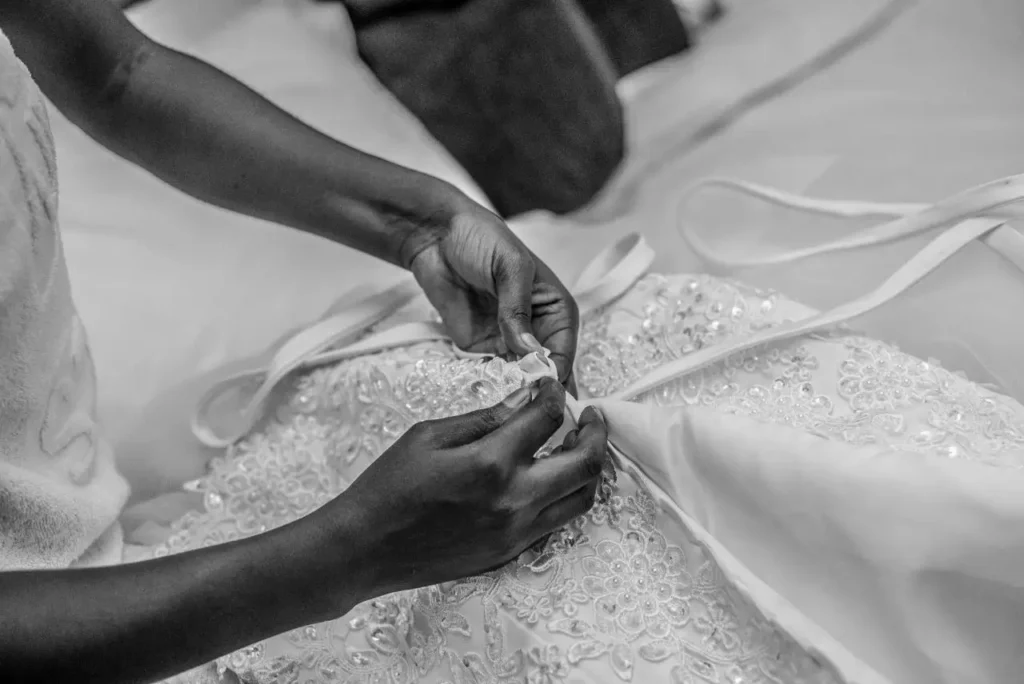
When should alterations start?
Timing matters more than many couples realize. Not because seamstresses are trying to create suspense but because beautiful tailoring takes time – especially during peak wedding season when alteration studios are packed with gowns.
Most bridal experts recommend starting the first wedding dress alteration appointment about two to three months before the wedding.
And the more alterations you need, the longer the process. Adding sleeves or reshaping the neckline? Those changes often require several fittings and a seamstress who knows bridal construction inside and out.
How many fittings are actually needed?
Not every dress needs an overhaul worthy of a reality show montage.
Typically, brides attend two or three fittings. The first focuses on pinning and assessing fit. The second fine-tunes everything. Then comes the final fitting, the exciting one where the gown suddenly moves perfectly, sits properly and feels finished.
Of course, complexity changes everything.
A sleek crepe gown with minimal structure may need only subtle adjustments. A fully beaded corset gown with layers of horsehair tulle? Different story entirely.
And don’t be surprised if your emotions get the best of you. One appointment might feel magical while another leaves a bride overanalyzing every wrinkle under fluorescent lighting. Completely normal.
How much do wedding dress alterations cost?
Here’s where many brides get blindsided.
Dress alteration budgets can range from fairly manageable to “wait… what?” depending on the gown and the changes required. Basic hemming and strap adjustments may cost a few hundred dollars, while extensive restructuring, lace appliqué work or intricate bustle designs can push costs much higher.
Beading, lace and layered skirts all add labour. So do difficult fabrics like silk charmeuse, which behaves beautifully once fitted but can be notoriously tricky during alterations.
Another thing worth knowing? Bridal tailoring is highly specialized. A talented bridal seamstress doesn’t simply shorten fabric – they sculpt the gown so it moves properly while preserving the original design. That level of craftsmanship matters.
Can a dress be taken in or let out easily?
Usually taken in? Yes. Let out? Sometimes.
Most wedding gowns include seam allowance, which gives seamstresses some flexibility. However, there are limits. Heavily embellished gowns, illusion backs and fitted corset designs often leave less room for dramatic size adjustments.
And here’s an important tip: avoid crash dieting before fittings. Alterations work best when body measurements remain fairly stable. Tiny fluctuations happen naturally. Radical changes two weeks before the wedding create unnecessary stress nobody needs while finalizing seating charts and chasing RSVPs.
What should brides bring to fittings?
Tiny details make a massive difference here.
Shoes absolutely matter because hem lengths vary with heel height. The undergarments matter too, especially with fitted crepe gowns or low-back silhouettes where every seam becomes visible.
If shapewear is part of the wedding-day plan, bring it. If a cathedral veil changes posture or hairstyle placement, bring that too for later fittings.
What is a bustle, and why does everyone seem confused by it?
A bustle lifts the train after the ceremony so the bride can move around without dragging several feet of fabric through cocktails, candles and questionable dance floor spills.
There are different bustle styles – American, French, ballroom and more – and the right one depends on the gown shape and train length. Some disappear seamlessly into the dress; others create gorgeous draping that almost looks intentional enough for a second outfit reveal.
Still, bustling often becomes one of the wedding morning’s funniest little chaotic moments. Bridesmaids squinting at ribbons. Someone holding a phone flashlight. One person confidently says, “I think this hook goes here?” while everyone else silently panics.
Pro tip? Ask the seamstress to film a quick tutorial during the final wedding dress alteration appointment.






Leave a Reply